
We had our first frost of the year on the ranch this morning, and that inspired me to keep going on the topic of landlord-tenant laws in California. (For those wondering, the connection between housing laws and the frost will become apparent as I discuss the matter further.)
Nevertheless, it’s no secret that housing is one of the most talked-about issues in California, especially in smaller, close-knit communities like my hometown of Ojai. One of the most common grievances I hear from tenants facing eviction is that they believe they are the victim of a retaliatory landlord, someone taking action against them simply for raising a concern or making a reasonable request. And they ask me the same question: What rights, if any, do I have to stay in my home?
A Little Background
Yesterday, we discussed the idea of “just cause”, the legal requirement that landlords have a valid reason to evict a tenant who has lived in the unit for more than 12 months. Prior to that 12-month mark, a landlord may generally terminate a tenancy with proper notice, even without cause.
The likely reasoning behind this is fairness. Lawmakers didn’t want to lock landlords into a relationship they might later regret, so they built in a short “getting-to-know-you” period where either side can bow out easily.
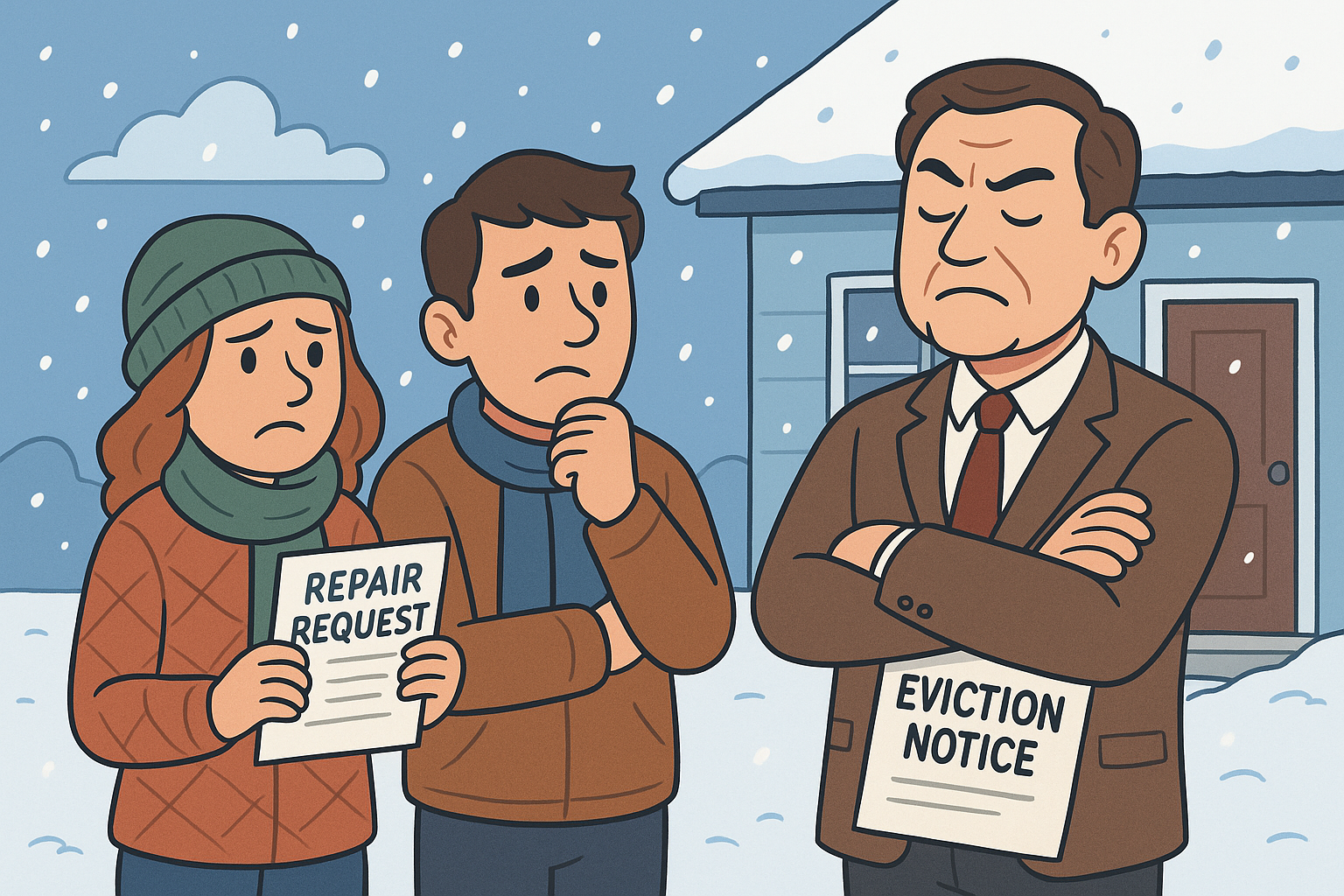
But in practice, what often happens is this: as that first year draws to a close, a landlord may start feeling anxious about losing flexibility once “just cause” protections kick in. So, when a tenant requests a small repair, say, a heater that needs fixing, it can get blown out of proportion. The landlord fears that the tenant might soon become “untouchable,” and in response, issues a 30-day notice. Suddenly, the tenant who thought everything was fine is scrambling to figure out if they have any rights.
The Law Protecting California Renters from Retaliatory Eviction
As with most things in landlord-tenant law, the lease agreement is the starting point. But California Civil Code § 1942.5 sets the floor—a baseline of rights below which landlords cannot go.
If a tenant makes a legitimate complaint about habitability to an appropriate agency, or otherwise exercises a legal right under statute or contract, and is not in default on rent, the law places a 180-day forbearance period on the landlord. During this window, the landlord may not:
- Recover possession of the dwelling,
- Cause the tenant to vacate involuntarily,
- Increase the rent, or
- Decrease services.
In plain English: if you speak up about unsafe or unlawful conditions, your landlord can’t retaliate for at least six months.
A Short Hypothetical
Let’s say you’ve rented a unit on a month-to-month basis for nine months. Winter is approaching, and the central heating stops working. You notify your landlord, who acknowledges the issue but does nothing. Another month passes, so you contact the local housing authority to report the habitability problem.
At that point, you’re protected. If your landlord serves you with a 30-day notice for any reason, you can point to Civil Code § 1942.5 and argue that any attempt to regain possession within the 180-day window is invalid.
Now, it’s important to note that retaliation protections aren’t narrowly limited to “bad motive” cases. The statute takes a broad approach. Even if a landlord claims to be removing the property from the market or demolishing it, actions that would ordinarily count as “just cause”, they still must wait out the 180 days if those actions follow a protected tenant complaint. The law draws a bright line to discourage any potential retaliation.
Conclusion
California’s landlord-tenant laws strive to balance fairness and public policy. Landlords may view these retaliation rules as harsh, but the Legislature designed them that way for a reason, to deter neglect and ensure safe, habitable housing.
The state doesn’t want its citizens getting sick, injured, or displaced because they were afraid to speak up. These laws serve as the “stick” that compels landlords to meet a minimum standard of care for the people of California.
If you find yourself in this kind of situation, especially as winter approaches and you fire up your central heating for the first time in months, only to discover it has fallen into disrepair, it’s crucial to speak with an attorney who understands the law and can help you assert your rights. Too often, tenants quietly endure substandard conditions out of fear of retaliation, a sad reality that this statute was meant to prevent. Having an advocate in your corner can make all the difference in feeling secure within the four walls of your home.
One thing worth adding since I first wrote this. Retaliation is not only a shield you raise after an eviction notice arrives. It is also a claim you can bring while you are still living in the unit, and several California statutes attach damages to a retaliatory rent increase or a cut in services even if you were never served with anything and never moved out. I have laid out each of those statutes, and what each one actually pays, on my landlord retaliation page.
—Alex Murad, Esq.