
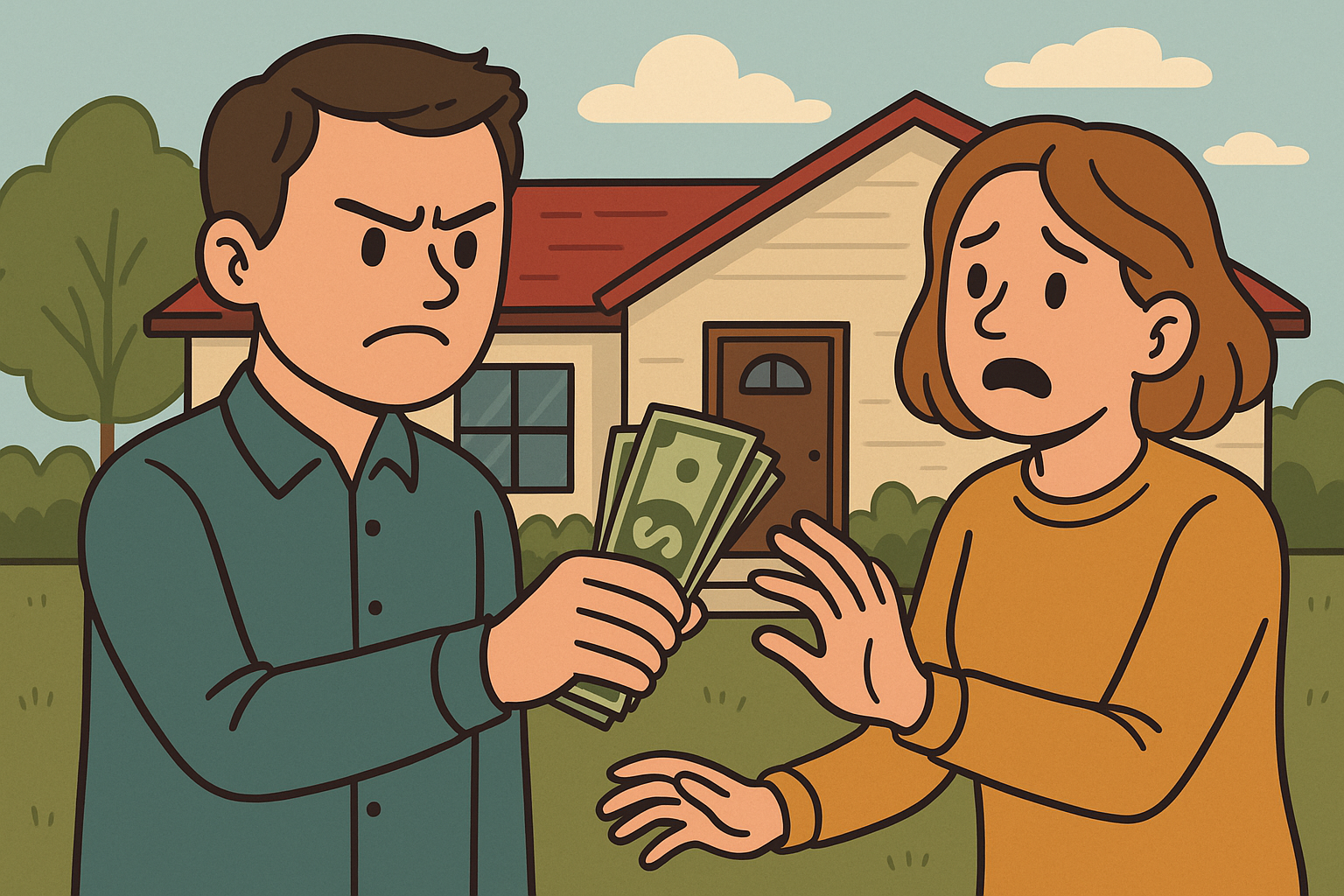
It’s that time of the month again, and whether you’re a tenant paying or a landlord receiving, the rent is always a topic ripe for conflict. Most of the time, the rent changes hands without issue, but when it doesn’t, things have a tendency to spiral out of control quickly.
Before I start, here’s the advice I always give my clients when they come to me with issues involving their landlord: pay your rent in full and on time. Renters often think that by handing over the money, they lose their bargaining power. The reality is, the money itself doesn’t hold as much leverage over the landlord as lawful possession of the property does.
So….. pay your rent in full and on time. Then contact an attorney who can hash out the issues with your landlord on your behalf.
Common Reasons Tenants Withhold Rent
Clients approach me all the time and drop a stack of documents a dictionary high on my desk, asking for help with an issue they’re having with their landlord. Of course, I oblige. But like clockwork, I turn to the page that shows they’ve withheld rent for several months, put the papers down, and look up in confusion.
Why haven’t you been paying your rent?
The reasons I get most often are that:
- The landlord needs to fix something and hasn’t;
- The landlord breached the lease agreement by taking away a parking space or some other ancillary property interest; or
- The landlord raised the rent and the tenant didn’t agree to it.
Now, every once in a while there’s a situation out of left field, so don’t think this is a conclusive list, but these are the most common scenarios I see in my practice. My clients usually think they’re well within their rights to withhold payment. And when they do, I sit them down and explain why they’re likely mistaken.
“Something Is Broken and the Landlord Hasn’t Fixed It”
In California, it’s true that a tenant can withhold rent when the property itself is legally uninhabitable. Uninhabitability (or “untenantability”) is a legal term that describes a property lacking basic requirements such as running water, electricity, and gas… the essentials. It can also extend to violations of health and safety codes, such as improperly installed or missing smoke and carbon monoxide detectors, mold at harmful levels, or insect or rodent infestations.
Under California Civil Code § 1942.4, a landlord may not demand or collect rent if a government agency has cited the property for serious habitability violations, the landlord has been notified, and those violations remain uncorrected for 35 days or more.
However, a creaky floorboard, a dead lightbulb, a leaky faucet, those ordinary annoyances that come with living in a home don’t make the property legally uninhabitable. The law doesn’t allow rent withholding in those circumstances.
I advise my clients: if you’re dealing with issues like that and your landlord is ignoring you, pay your rent and have your attorney write a letter explaining the issue and the potential downstream consequences of failing to make repairs. Those consequences can include liability for injury under negligence law…. and trust me, nothing gets a landlord’s attention faster than that.
On the other hand, if you simply stop paying rent, your landlord now has just cause to evict you, and no court will entertain the defense that there was a burnt-out lightbulb outside that never got replaced.
“My Landlord Took Away My Parking Space”
This one happens a lot, especially in Southern California, where everyone drives and parking is gold.
Often, landlords and tenants make informal deals about parking spaces included with the rental. And even when those agreements are reduced to writing, landlords sometimes take those spaces away with little or no notice. It infuriates tenants, understandably so, and some respond by refusing to pay rent until they get the spot back.
The idea that a landlord has breached the lease by revoking a parking space is very nuanced. Whether it’s a breach depends on whether the lease expressly includes the parking space as part of the tenancy. If it does, taking it away may constitute a partial breach, but it doesn’t excuse you from paying rent.
Once you withhold rent, you become the party in breach of the lease. That kills your leverage, especially in front of a judge who sees a landlord who misappropriated a parking space, and a tenant who stopped paying rent altogether.
If this happens, keep paying your rent as agreed and hire an attorney to deal with the parking issue directly. It’s a messy problem, often involving third parties, and you don’t want to handle it alone.
“The Landlord Raised My Rent — and I Didn’t Agree to It”
Some tenants come to me saying their landlord unilaterally increased the rent, so they’ve withheld payment altogether. I sympathize, tenants often feel powerless in these situations and think the only way to regain control is to stop paying. But again, that’s a mistake.
In California, landlords are permitted to increase rent in certain circumstances, but within clear limits. Under California Civil Code § 1947.12, in any 12-month period, a landlord generally may not increase rent by more than:
- 5% plus the percentage change in the cost of living (as measured by the applicable Consumer Price Index); or
- 10% of the lowest gross rental rate charged at any time during the prior 12 months —
whichever is lower.
This rule applies to most multi-unit residential properties built more than 15 years ago, but not to newer or single-family homes exempt under AB 1482 (the Tenant Protection Act) for the most part. However, in the communities I serve, Ojai and the greater Ventura County area, these general rules largely apply.
If your landlord increases rent within those limits and you don’t want to pay it, you don’t have to. You can simply leave at the end of your term. But if you stay, and the increase complies with the law, then you’re on the hook for it.
Conclusion
Ultimately, the law rewards tenants who stay current on their rent. It puts you in a stronger position — both with your landlord and in court.
If you’ve made it this far (or if you just skipped to the end), here’s the one piece of advice worth remembering:
Pay your rent in full and on time. Let your attorney handle everything else.
— Alex Murad, Esq.